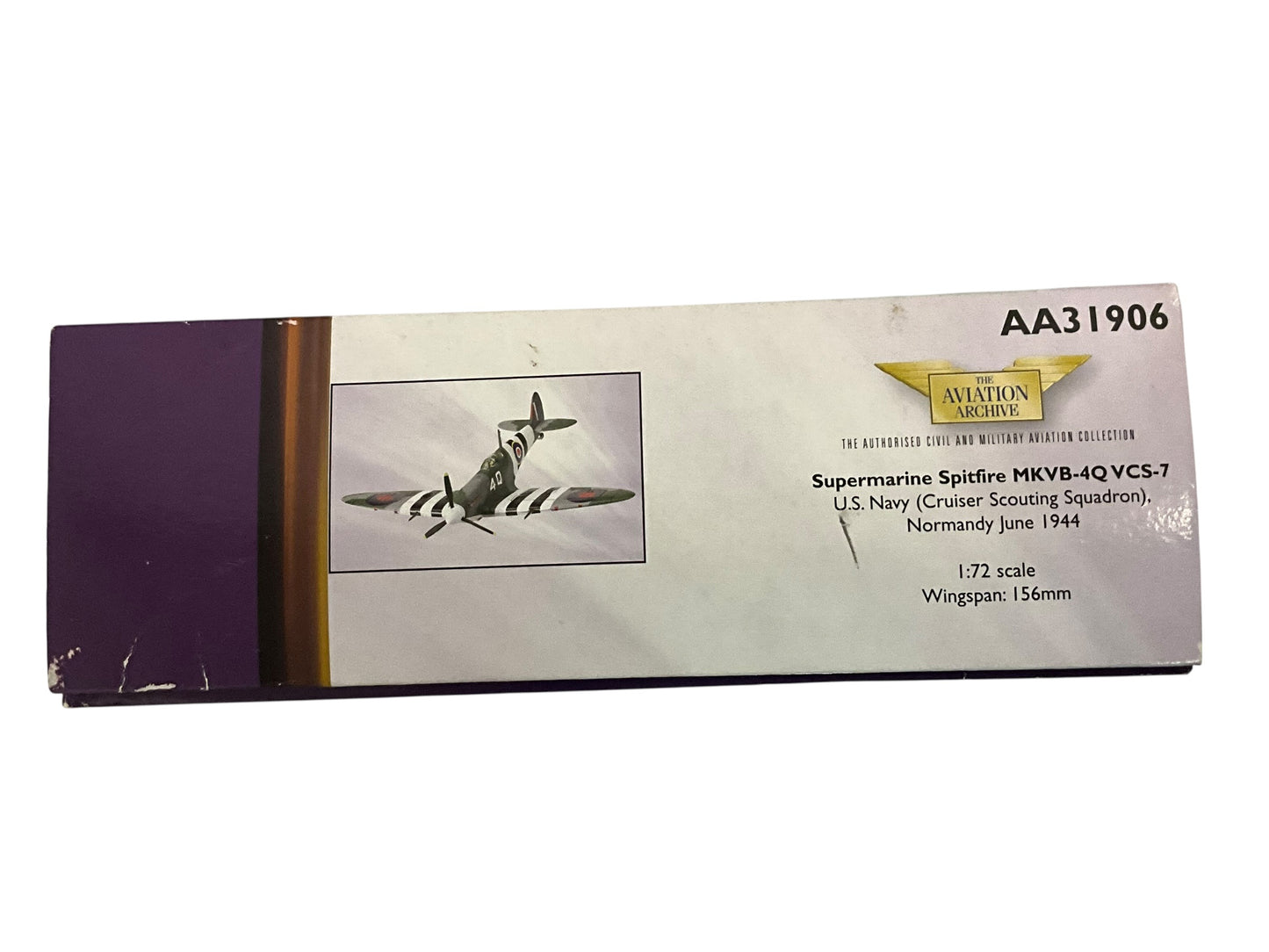
1/72 Corgi (AA31906) Supermarine Spitfire MK.VB (4Q) "D-Day 60th Anniversary" Normandy June 1944, VCS-7 (Cruiser Scouting Sqdn) U.S. Navy (Limited Edition #6147 of Only 7100) 2004 Release
Corgi Aviation Archive Collector Series AA31906 Supermarine Spitfire Mk Vb Diecast Model USN VCS-7 Cruiser Scouting, D-Day, June 6th 1944
Limited Edition 7100 Pieces Worldwide
1:72 Scale
Length
Width
Supermarine Spitfire Mk V
5"
6.25"
Spotting for the naval bombardment during the D-Day, June 6th 1944 invasion was done by 34 Recce Wing, the Air Spotting Pool of 2nd Tactical Air Force. This was made up of 26 and 63 Squadrons RAF, 885 Squadron RN, and VCS-7 USN and was commanded by a Commodore of the RN. The aircraft used were Spitfire Vbs and Seafire Ills. With the launch of the D-Day, June 6th 1944 invasion of Normandy imminent, seventeen naval aviators were taken from aviation units on battleships and cruisers and were assigned to bombardment duty as part of VCS-7. The spotters flew the Spitfires from June 6th through June 26th, although they started flying some of their original aircraft as early as June 25th. Once Cherbourg fell VCS-7 was disbanded and the Spitfires were returned to the British, The US Navy shows 1 combat loss of a Spitfire from VCS-7.
Designed by R.J.Michell to meet a British Air Ministry specification, the Supermarine Spitfire first flown on March 5th, 1936. With its combination of beautiful fighter design, the excellent performance of its Rolls-Royce Merlin powerplant and firepower provided by twin cannons and four machine guns, the Spitfire became an unrivaled symbol of victory. The Spitfire had 40 major variants and was built in greater numbers than any other British aircraft of the time. It flew operationally on every front between 1939 and 1945 and was engaged in every one of the Royal Air Force's major actions.